
Static Friction Coefficient Measurement Device
Designed a concept and measurement device for a climbing-equipment application in BYU's introductory design course. The system estimated static friction between rope and a cylindrical surface by relating spring displacement to rope tension at the point of slip. This project demonstrates early product design thinking, mechanism design, and engineering measurement.
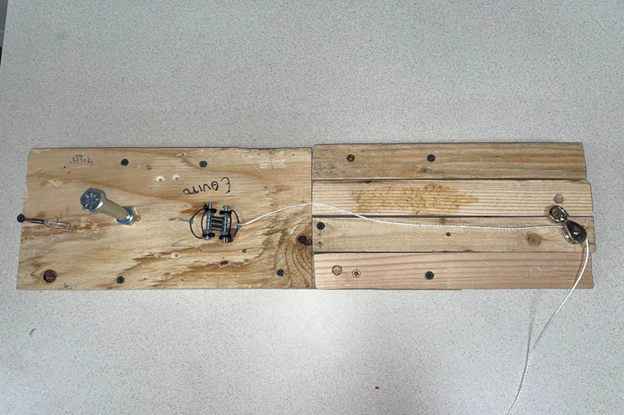
Overview
This was a BYU ME EN 101 design project completed with a team of five. The goal was to create a device for a climbing-equipment company that could measure the static friction coefficient between a rope and a carabiner.
The device was designed to accommodate variable rope diameters approximately 12 inches long with minimal human intervention. Our target measurement range was coefficients of friction between 0.03 and 0.4 around a 1/2-inch-diameter steel bolt.
Timeline
- Duration: April 2024
- Total time: 15 hours
Results
The design determined the ratio of rope tensions on each side of the cylinder at the moment of slip, which allowed the static coefficient of friction to be computed.
The instrument used fixed springs attached to both sides of the rope wrapped around the cylinder. Spring displacement corresponded to force, and therefore to rope tension at static equilibrium. One side of the rope was held at a constant tension, so only the displacement on the other side needed to be measured by the user.
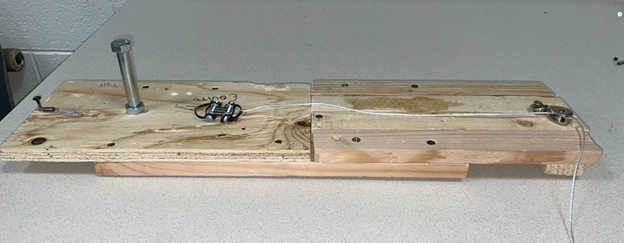
The friction coefficient measurement device
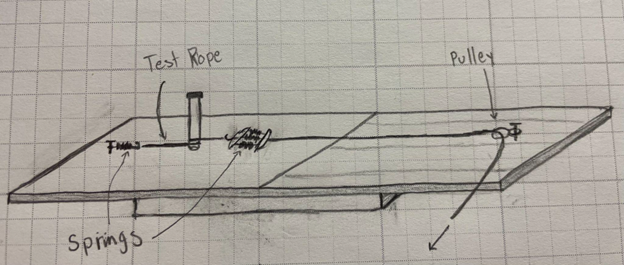
General concept and drawing of the designed instrument
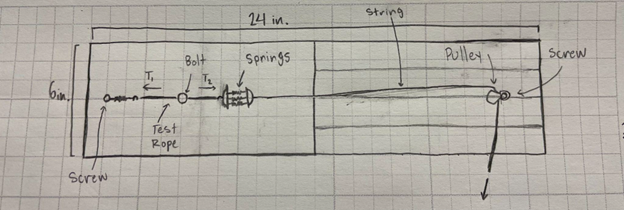
Detailed concept and drawing of the designed instrument