
Counter-UAS Drones
Designed and built several drone platforms for a counter-UAS development effort, including a 3D-printed PX4 quadrotor integrated with a Raspberry Pi companion computer, a 9-inch FPV interceptor testbed with onboard AI hardware, and a 5-inch FPV training and payload platform. My work focused on mechanical design, CAD, 3D printing, assembly, repair, and system integration for autonomy-focused flight testing.
Overview
This project focused on building small UAS platforms for counter-UAS autonomy development, test operations, and training. Across the project I designed and built several drone configurations, ranging from a custom 3D-printed PX4 quadrotor to FPV platforms intended for autonomy experiments, target-following tests, payload work, and field practice.
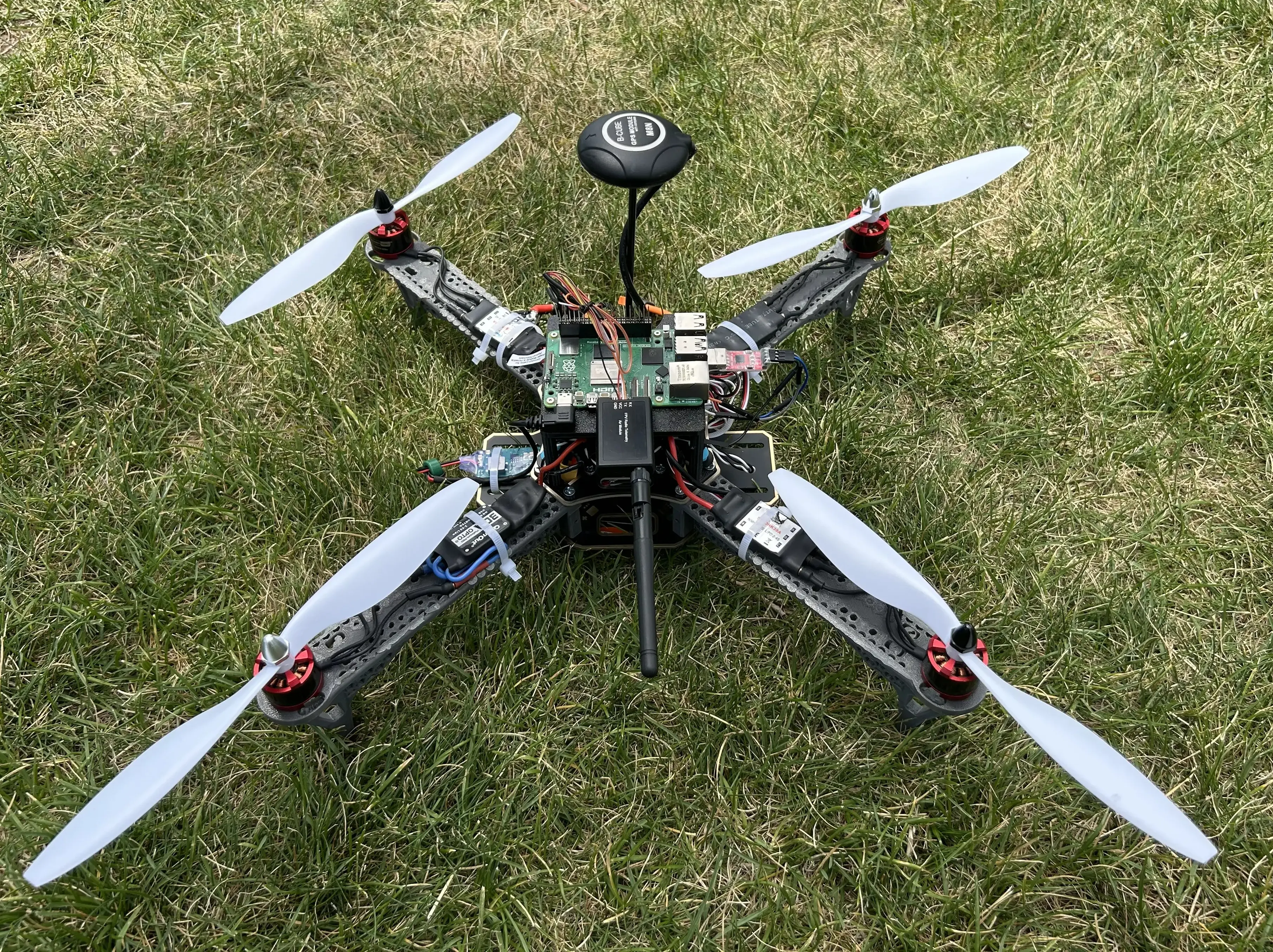
I served as the mechanical design lead on a four-person development team. I created the CAD models shown in this project, designed and printed custom structural components, assembled flight hardware, supported integration with flight controllers and companion computers, and repaired drones after testing. The header image shows the finished 3D-printed quadrotor frame with a PX4 flight controller and Raspberry Pi companion computer.
The strongest result was a successful autonomous flight test of the custom PX4 quadrotor running within an Open Mission Systems (OMS) architecture that supported Air Force autonomy frameworks.
Key Contributions
- Designed all CAD models shown on this page using Onshape
- Built a custom 3D-printed quadrotor frame around PX4 flight hardware and a Raspberry Pi companion computer
- Integrated mechanical packaging around flight controllers, compute hardware, batteries, wiring, and payload constraints
- Developed a 9-inch FPV interceptor testbed for onboard object-detection and autonomy experiments
- Built and maintained a 5-inch FPV drone for training, testing, and payload support
- Assembled, repaired, and iterated drone hardware after field testing
- Supported the transition from manual FPV operation toward autonomy-focused test workflows
Timeline
- Duration: May 2026 - July 2026
- Team size: 4 people
- Role: Mechanical design lead
- Focus: Drone CAD, fabrication, assembly, repair, and autonomy integration support
Results
Autonomous PX4 Quadrotor
Autonomous quadrotor test flight running Open Mission Systems (OMS)
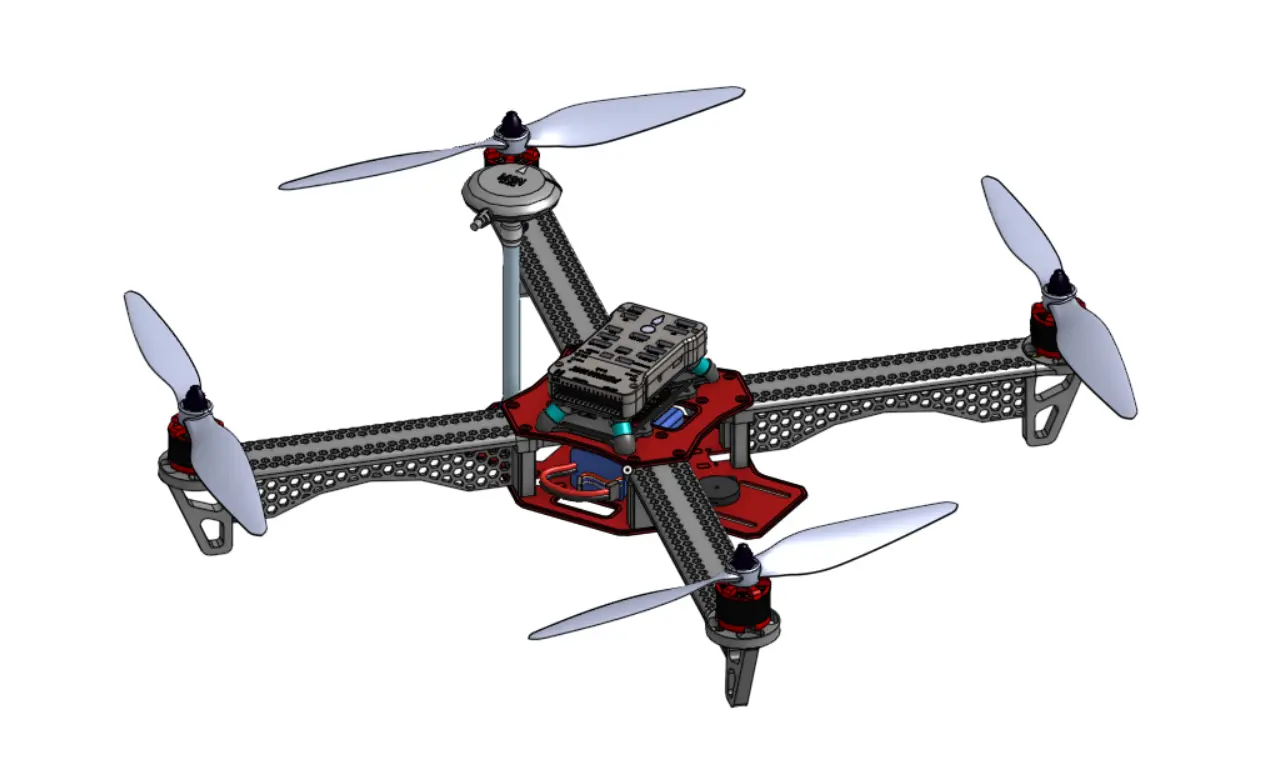
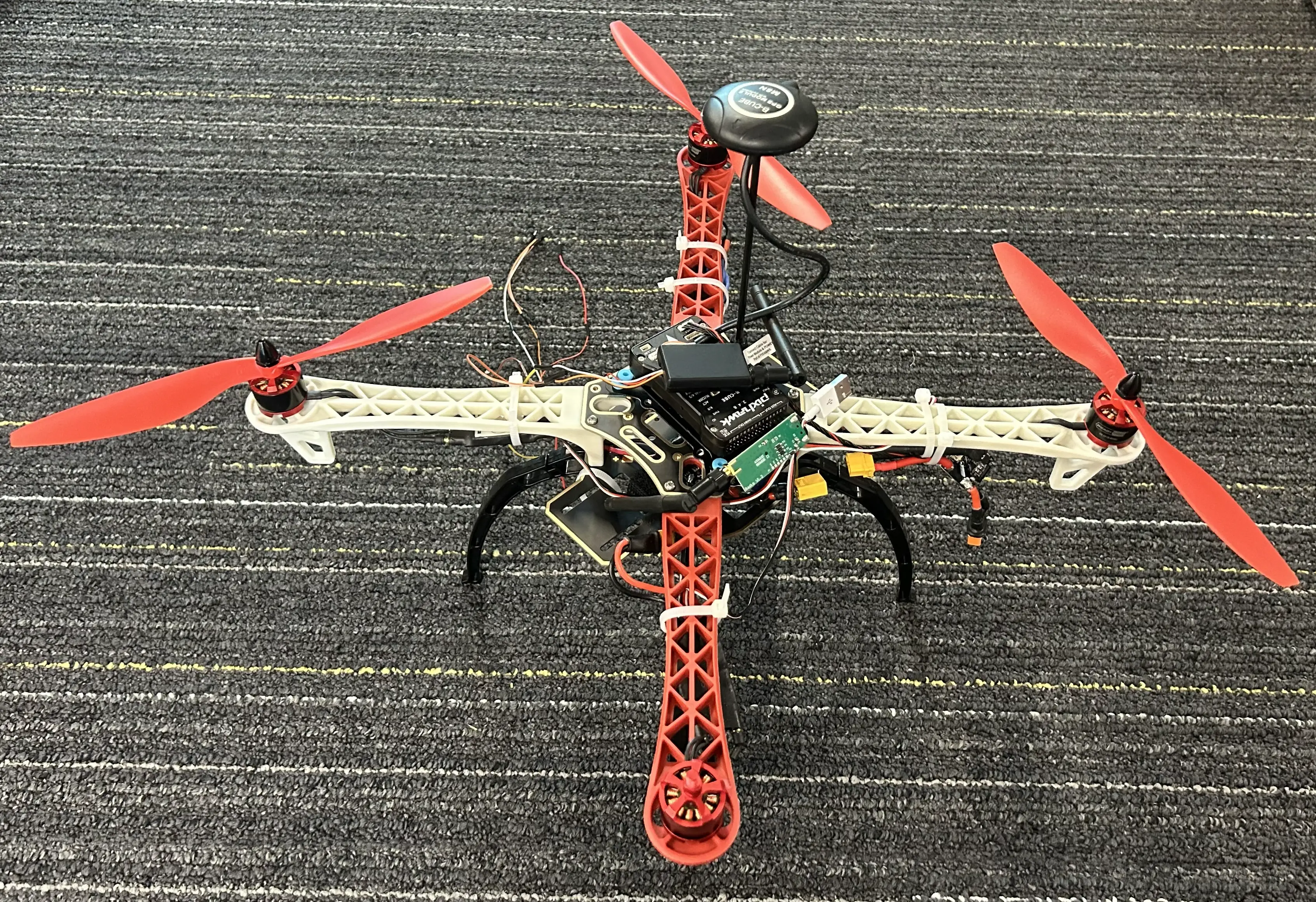
The first platform was a custom 3D-printed quadrotor built around the PX4 flight stack and a Raspberry Pi companion computer. The goal was to provide a configurable autonomy testbed inside an Open Mission Systems architecture, making the vehicle useful for experiments that needed repeatable hardware, accessible mounting points, and fast mechanical iteration.
I designed the frame, printed the structural components, packaged the electronics, and helped bring the vehicle from CAD to a successful autonomous flight test. This drone became the most mature platform in the project and is the version shown in the header image and flight video.
9-Inch FPV Interceptor Testbed
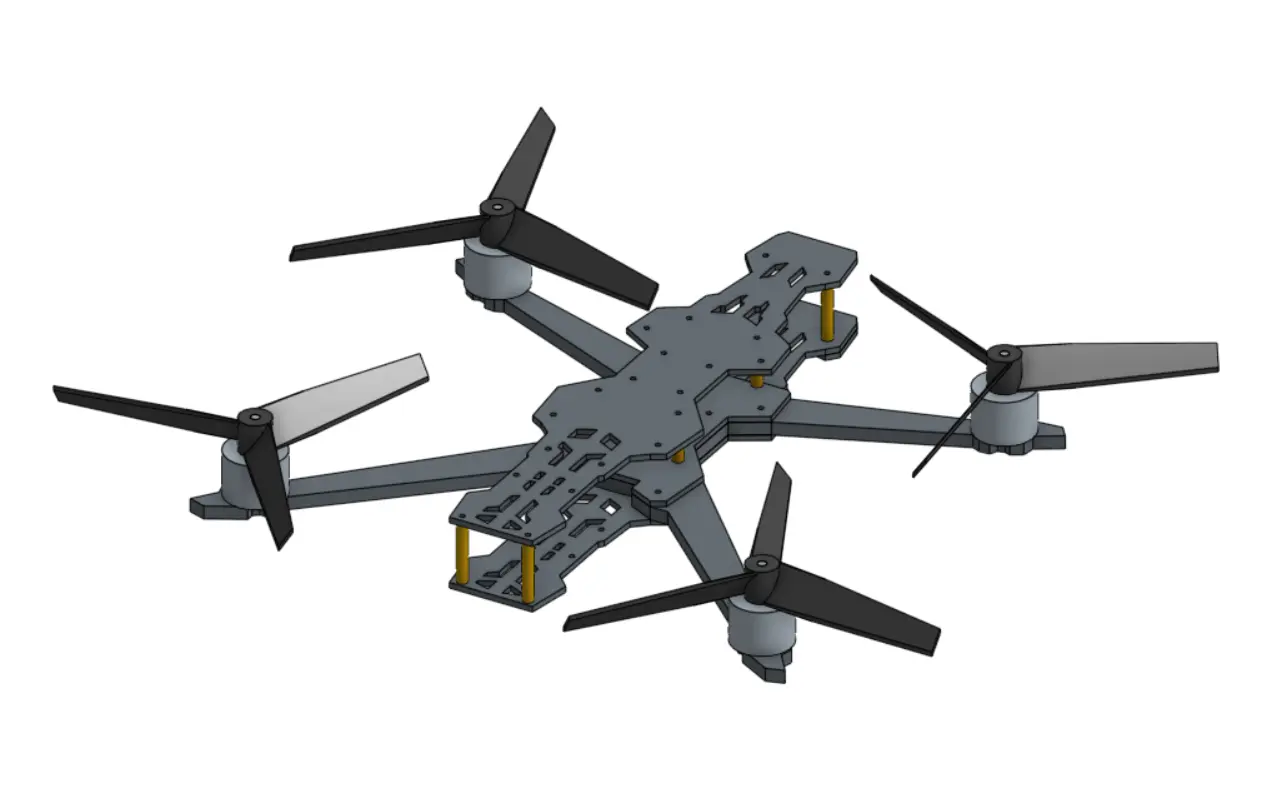
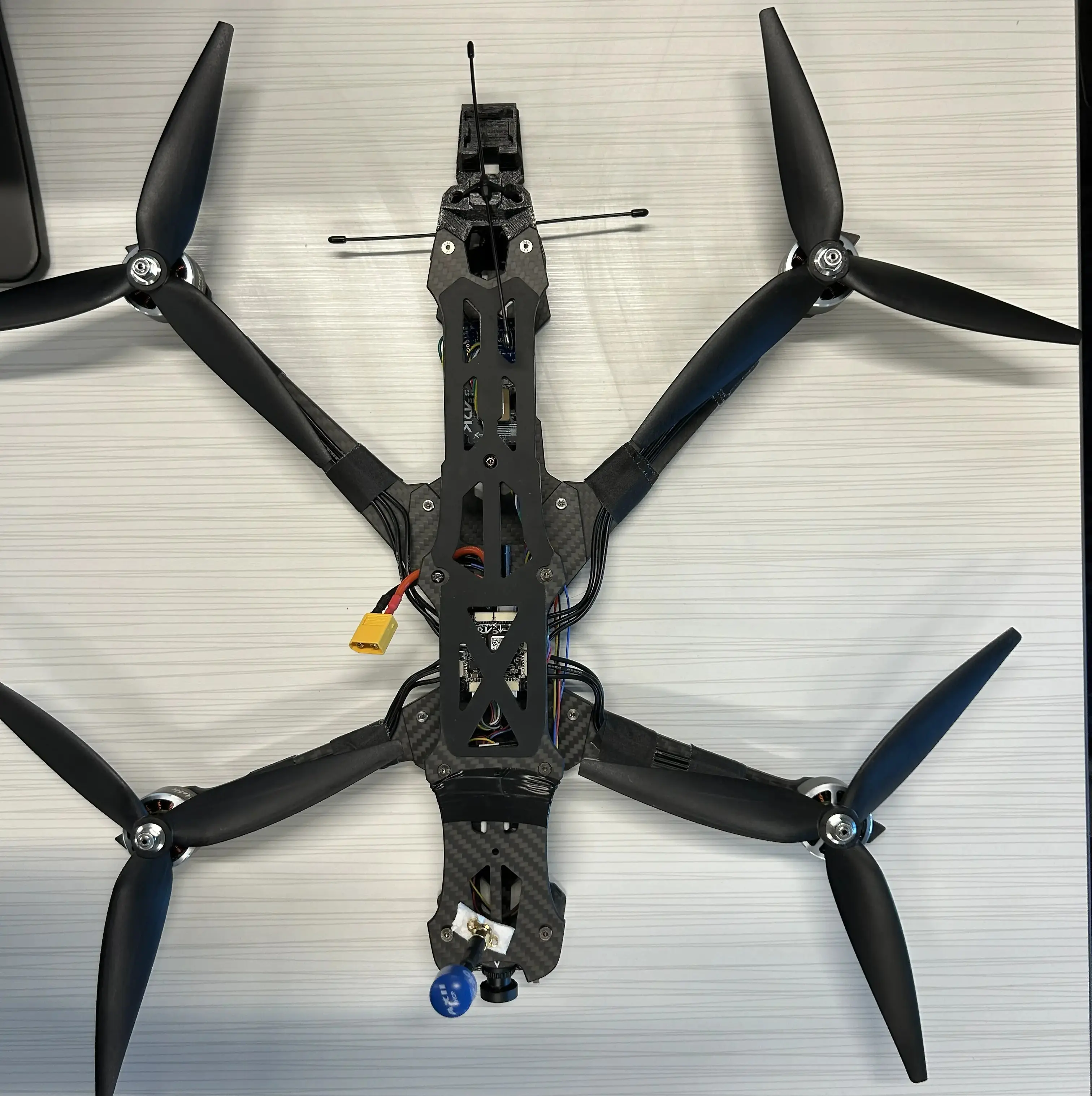
The second platform was a larger FPV drone intended for counter-UAS autonomy experiments. It used a Raspberry Pi 5, AI Hat+, and YOLOv8 object detection on a custom FPV airframe. The concept was to let a pilot operate the drone manually, then transition to an autonomous mode once the system identified a target drone.
This platform did not reach flight testing during the project window. The latest stage was a field demonstration where the object-detection model recognized targets and followed them visually, giving the team a foundation for future closed-loop autonomy work.
5-Inch FPV Training and Payload Platform
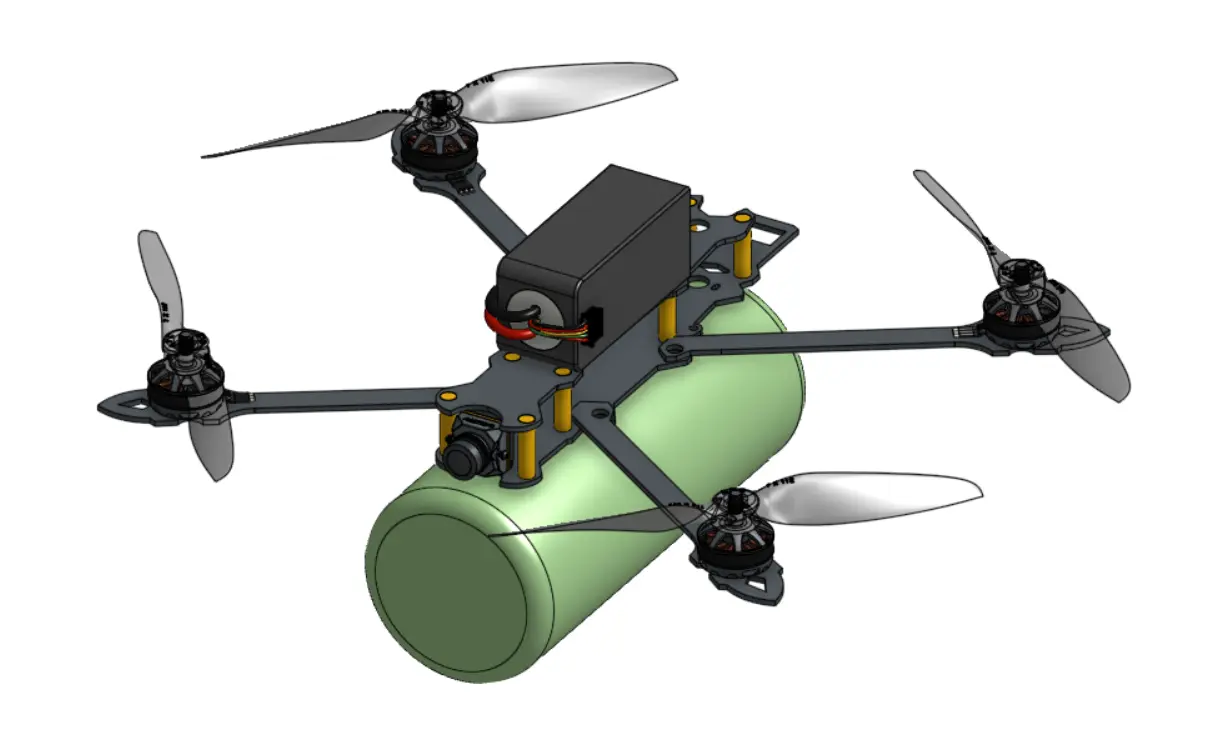
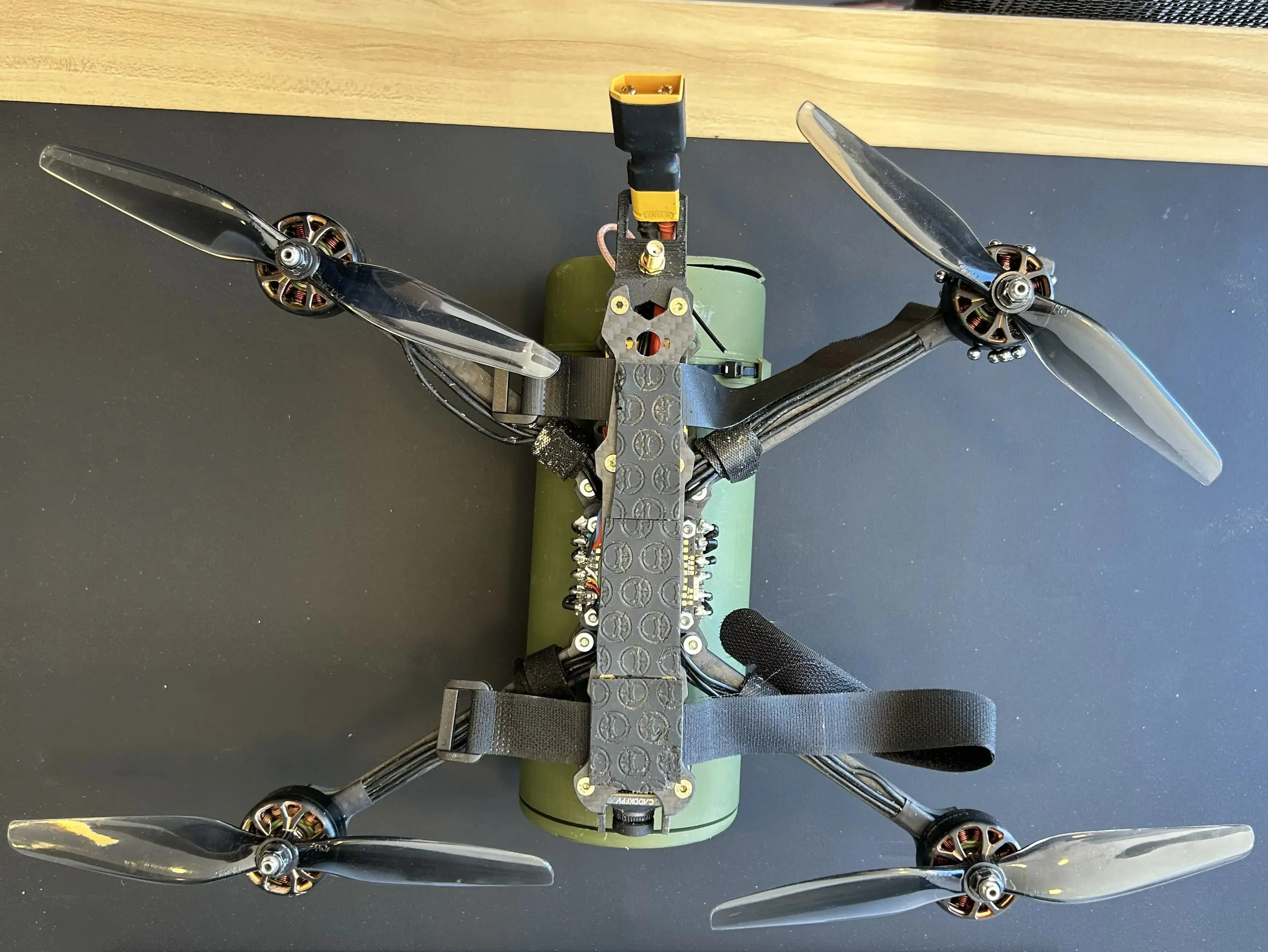
The third platform was a 5-inch FPV drone used for training, testing, and payload-capacity work. I helped build, maintain, support, and repair this vehicle so the team had a smaller, more convenient airframe for field practice and rapid hardware iteration.
Platform Summary
- 3D-printed PX4 quadrotor: custom mechanical design, Raspberry Pi companion computer, OMS autonomy workflow, successful autonomous flight test
- 9-inch FPV interceptor testbed: Betaflight-based platform with Raspberry Pi 5, AI Hat+, and YOLOv8 object detection for counter-UAS autonomy experiments
- 5-inch FPV platform: compact training and payload-support drone for testing, maintenance, and field operations