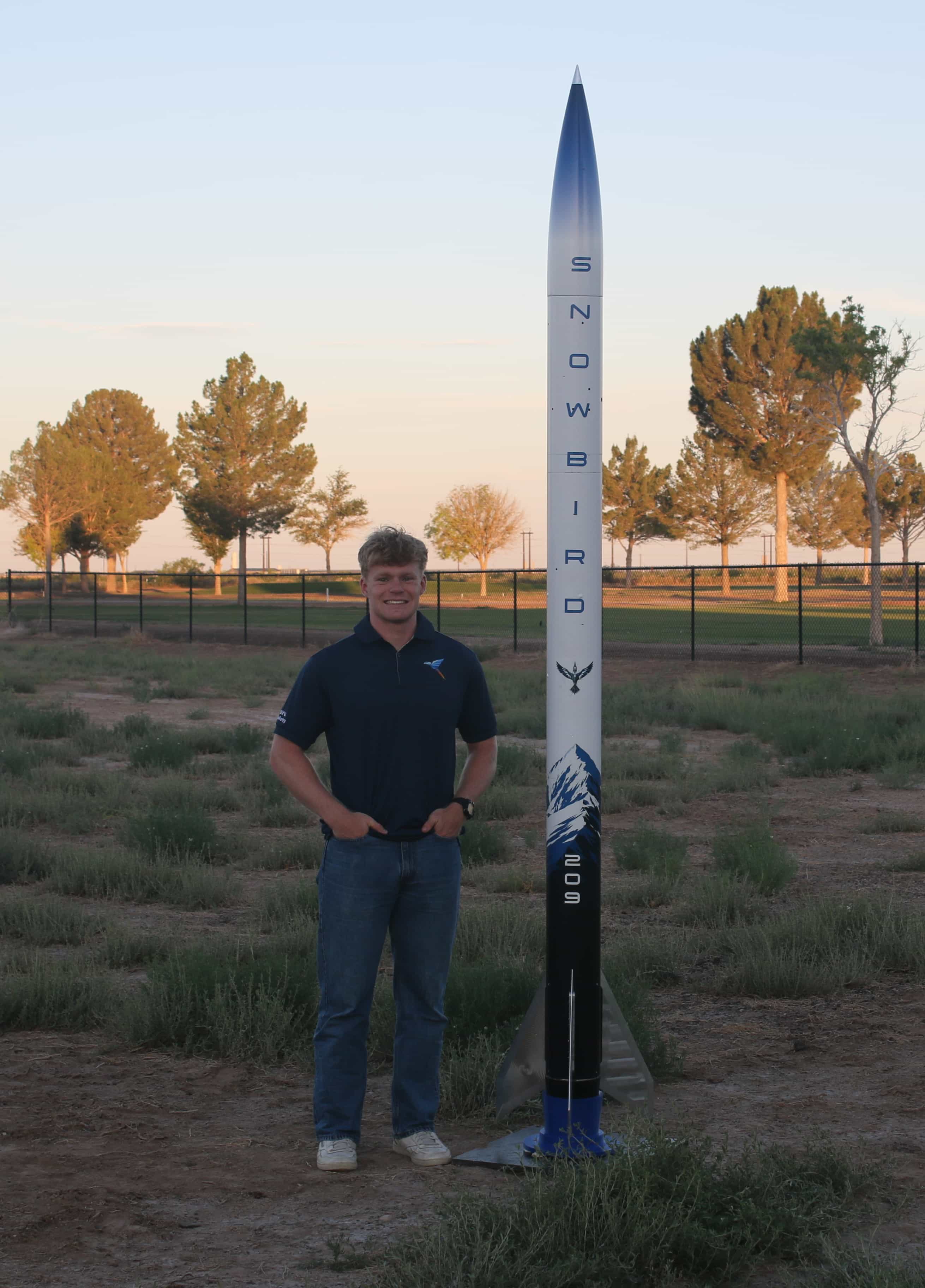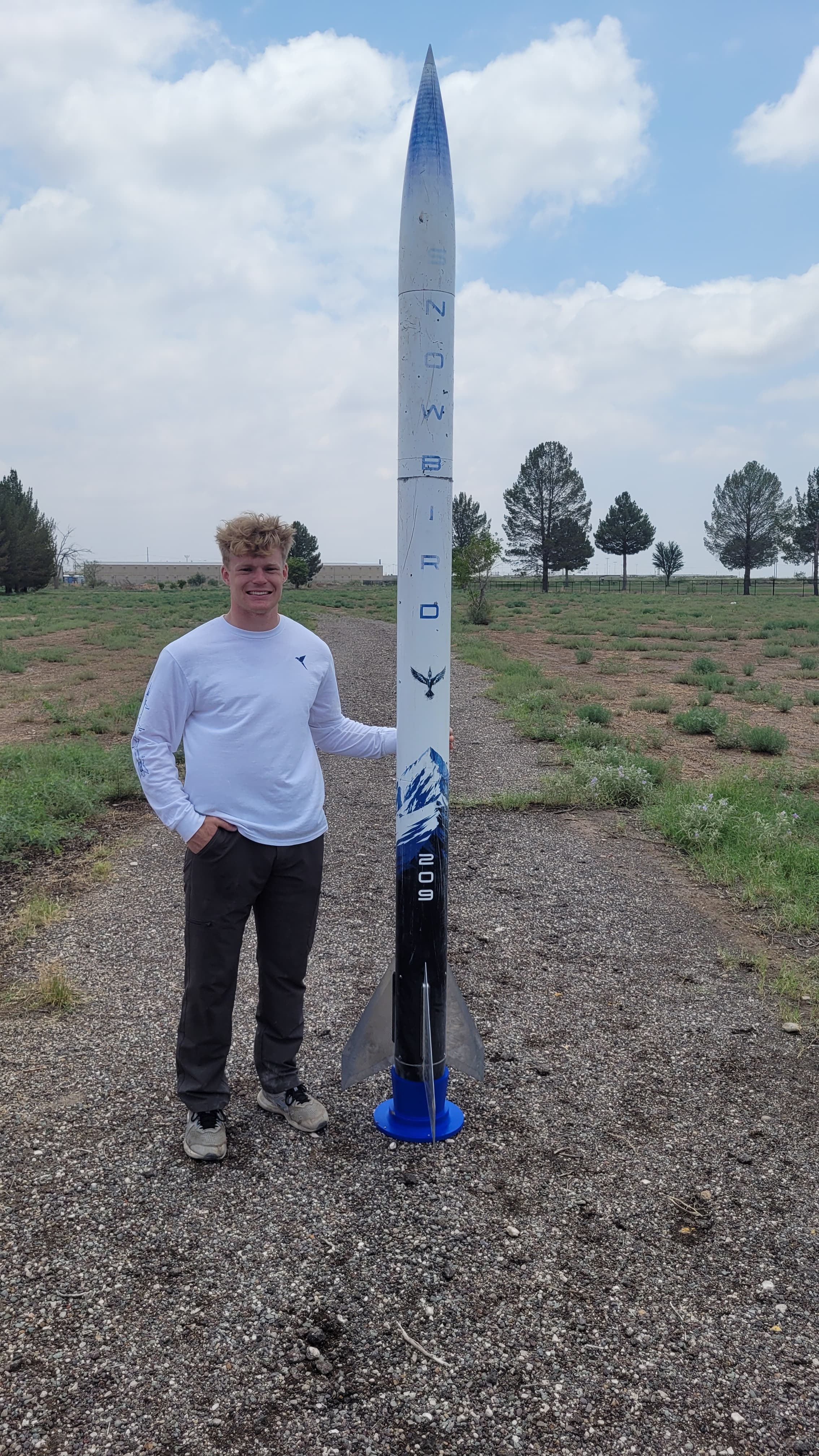
Snowbird BYU High Power Rocket
Worked on the structures team for Snowbird, BYU Rocketry's 2026 High Power Team rocket. I contributed to CAD, bolt calculations, carbon-fiber and aluminum manufacturing, fin and boat-tail design, and integration with GNC and payload systems. Snowbird competed at IREC 2026 and placed 4th out of 21 teams in the 30K COTS category.
Overview
Team video submission
Snowbird was BYU Rocketry’s 2026 High Power Team rocket for the Intercollegiate Rocket Engineering Competition. Our 13-person team designed, manufactured, integrated, and launched a 30,000 ft Commercial Off-the-Shelf motor rocket for IREC 2026, where we placed 4th out of 21 teams in the 30K COTS category.
I worked on the structures team, which owned the rocket’s carbon-fiber airframe, aluminum fins, fin brackets, couplers, thrust plate, fasteners, and other primary structural hardware. I assisted throughout manufacturing and integration, with deeper ownership over bolt calculations, the full CAD model, GNC and payload integration support, fin manufacturing, boat-tail design work, 3D-printed fin covers for transport, and drilling precision holes in the body tubes.
Beyond the technical work, this project taught me how much communication and coordination matter when many small pieces have to become one reliable flight vehicle. Structures, GNC, payload, recovery, manufacturing, and launch operations all had to converge cleanly for Snowbird to fly.
Key Specs
- Rocket name: Snowbird
- Competition category: IREC 2026, 30K Commercial Off-the-Shelf
- Height: 3.01 m
- Mass without motor: 21.1 kg
- Mass with motor: 37.9 kg
- Average thrust: 5,531 N
- Maximum thrust: 7,724 N
- Minimum stability: 1.96 calibers
- Center of pressure: 2.217 m
- Center of gravity: 1.907 m
- Airframe diameter: 152 mm inner diameter, 156 mm outer diameter
- Airframe construction: three carbon-fiber body tubes and two carbon-fiber couplers
- Fins: three 6061-T6 aluminum fins
- Fin can: 7075 aluminum fin brackets bolted to carbon-fiber-reinforced wooden centering rings
- Measured carbon-fiber compression strength: 105 MPa ultimate compressive strength
- Carbon-fiber maximum compression test load: 65.15 kN
- Thrust plate safety factor: 8.25
- Carbon-fiber bending safety factor: 2.49 against potential delamination
Key Contributions
- Created the full rocket CAD model and supported design integration across structures, GNC, and payload systems
- Performed bolt calculations for structural interfaces including fin brackets, fin bolts, and other fastened joints
- Helped manufacture carbon-fiber airframe tubes, couplers, aluminum fins, fin brackets, thrust plate hardware, bolts, and related structural parts
- Assisted with boat-tail design and optimization to improve the aft-end structure and aerodynamic packaging
- Manufactured and finished 3D-printed fin covers to protect the fins during transport
- Drilled multiple body-tube holes for integration and assembly features
- Supported final integration, launch preparation, and team coordination at IREC 2026
Timeline
- Duration: September 2025 - June 2026
- Total time: Approximately 100 hours
- Team size: 13 students
- Competition: IREC 2026
Results
Design and Manufacturing
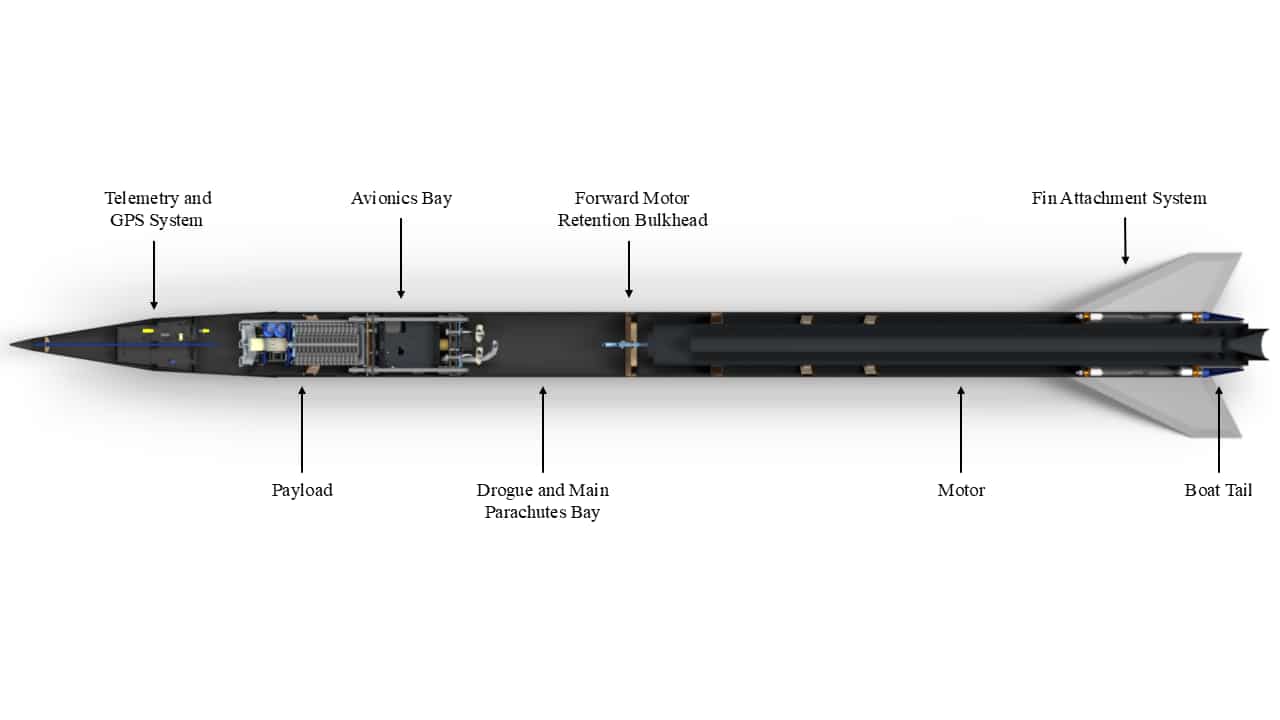
Labeled overview of Snowbird’s major systems and vehicle layout
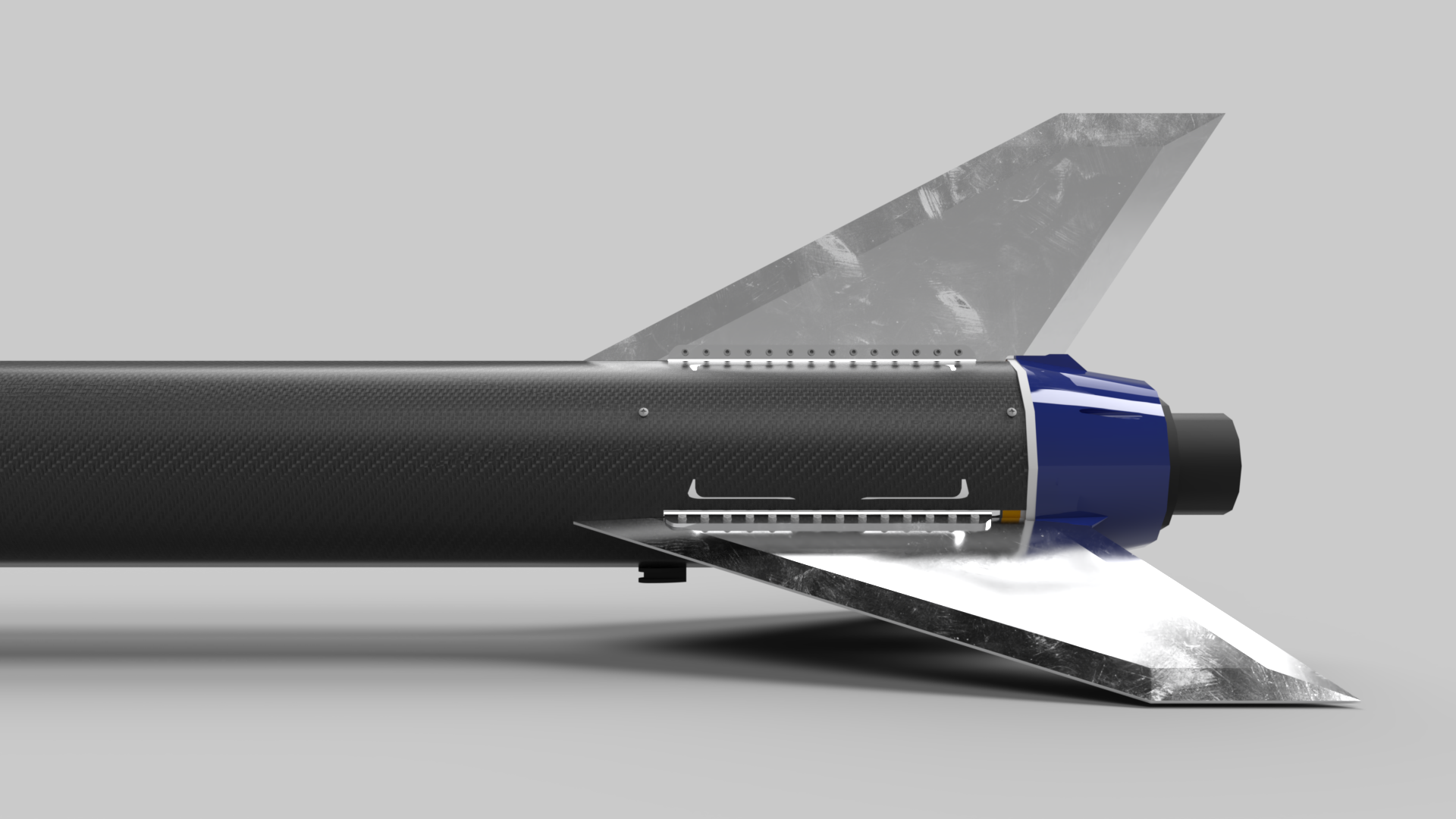
CAD render of the fin and aft-body region
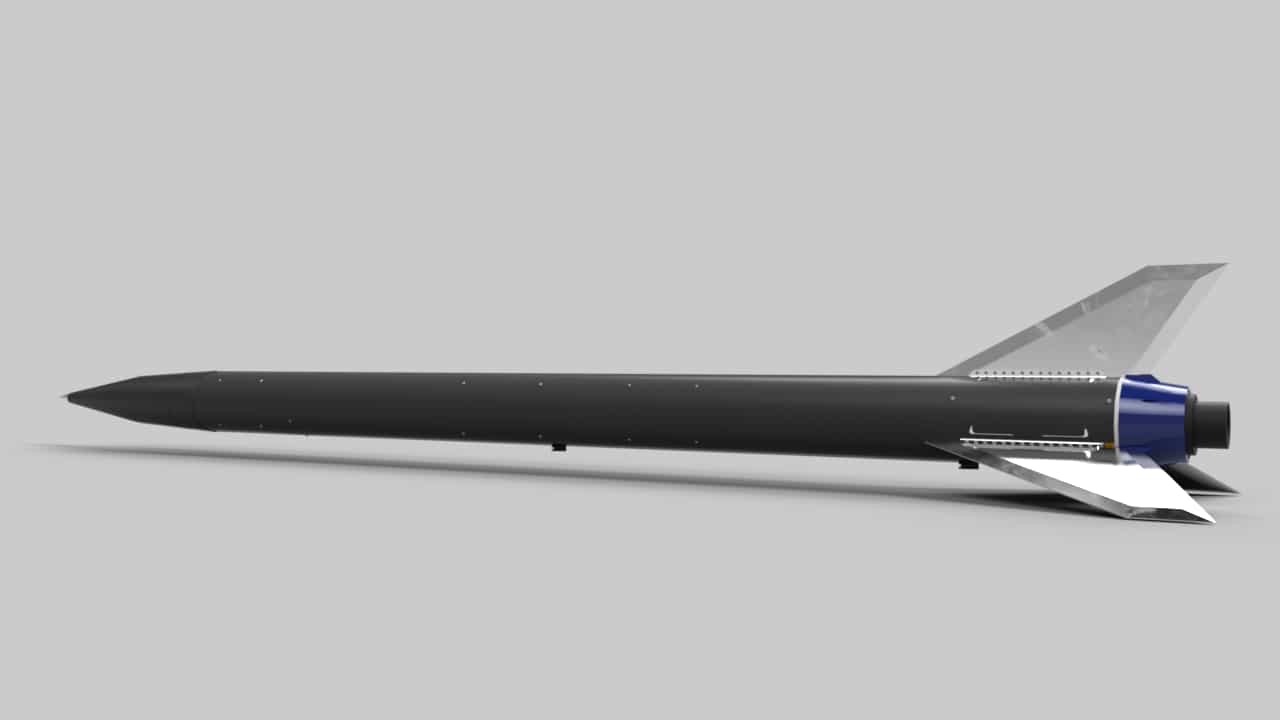
Full CAD render of Snowbird
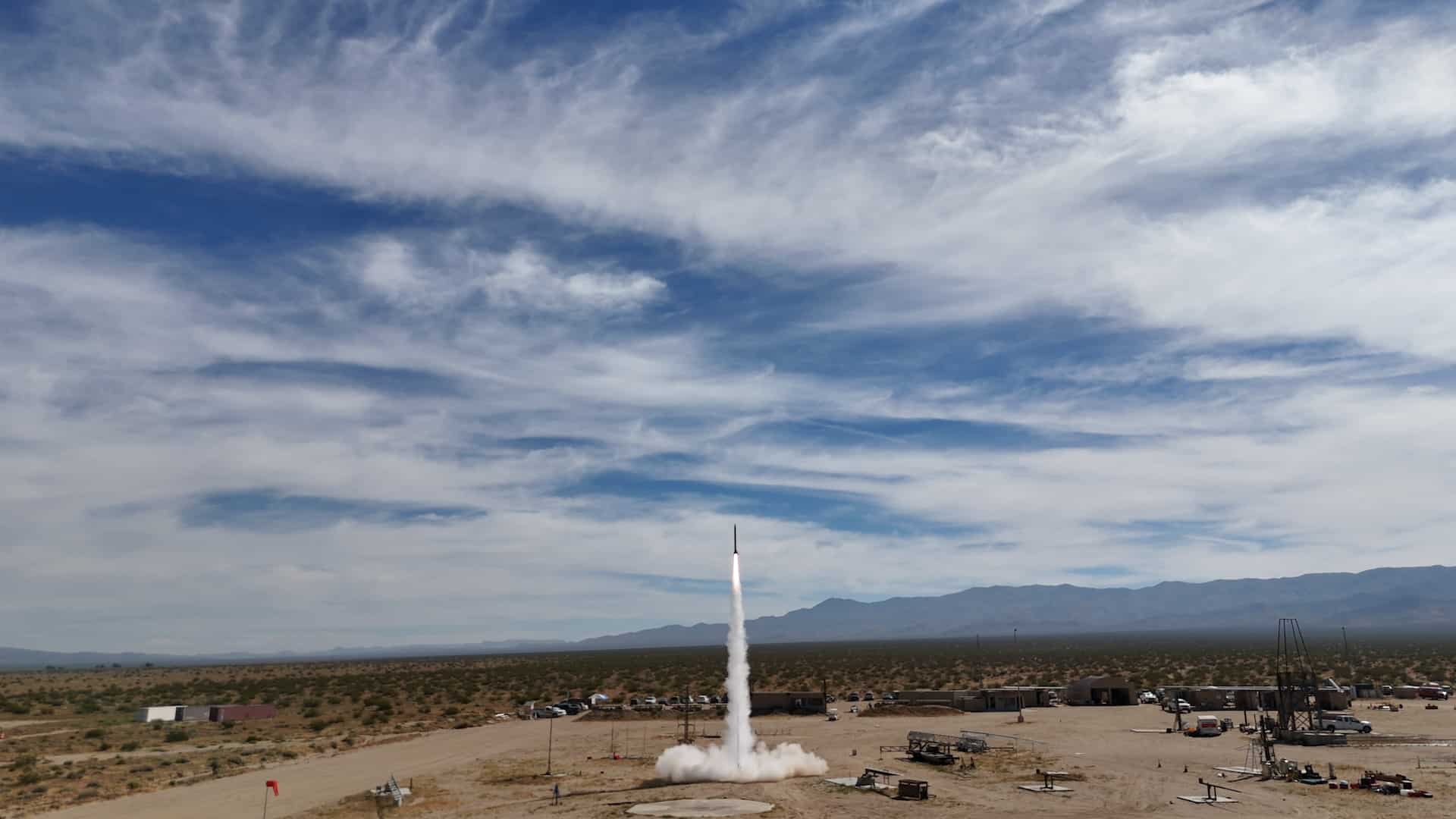
Test launch at FAR-OUT site in California
Launch

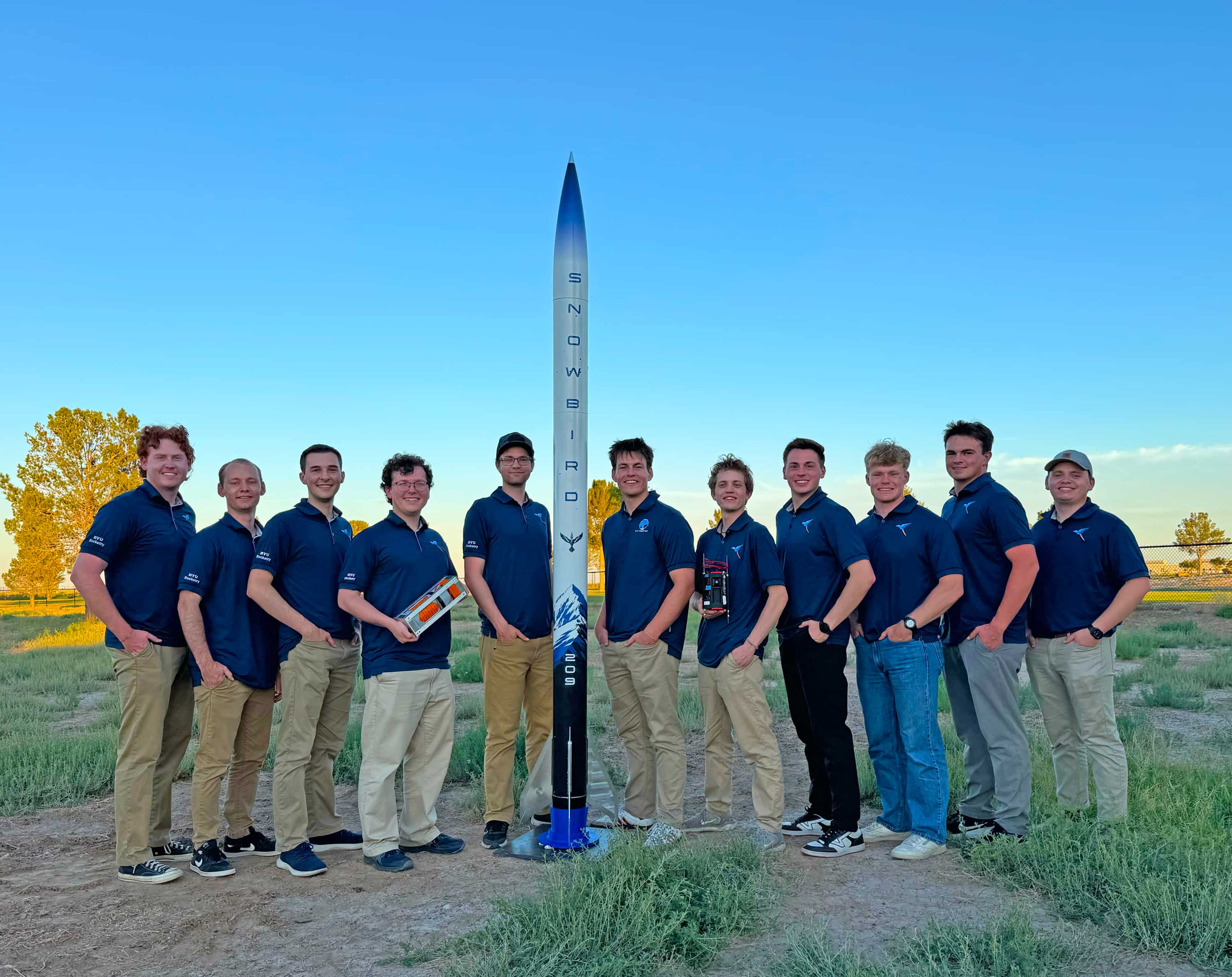
BYU Rocketry High Power Team with Snowbird
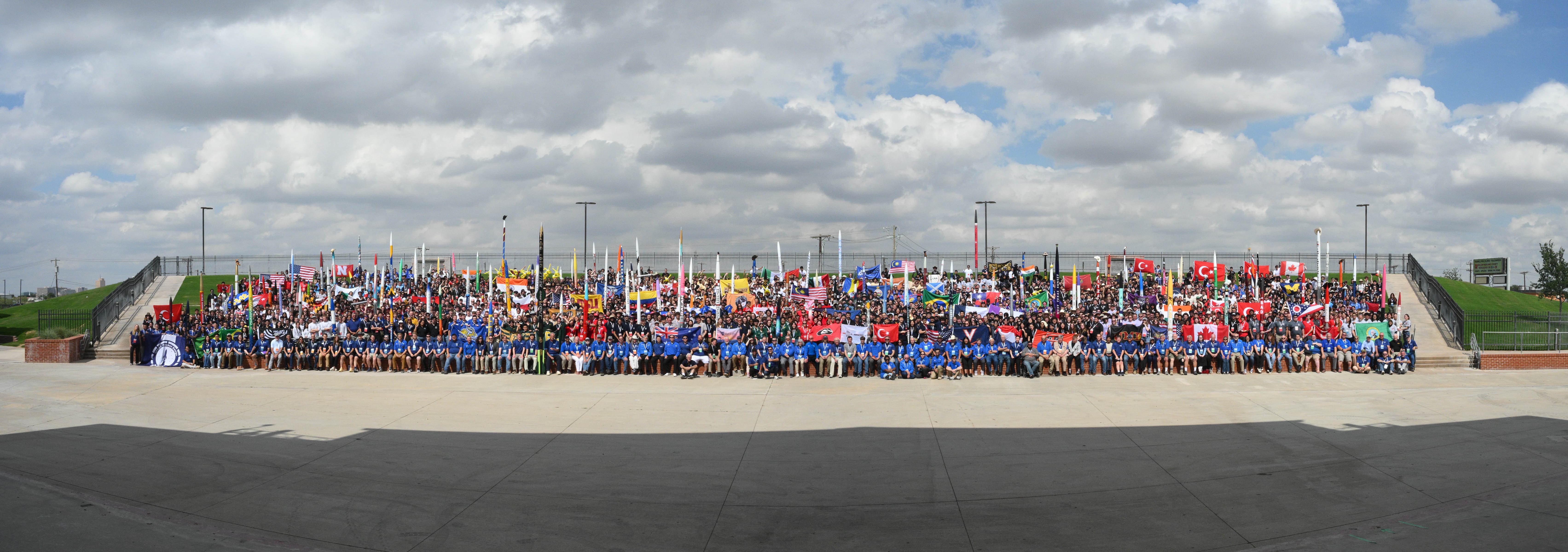
The 2026 IREC Competition in Midland, TX
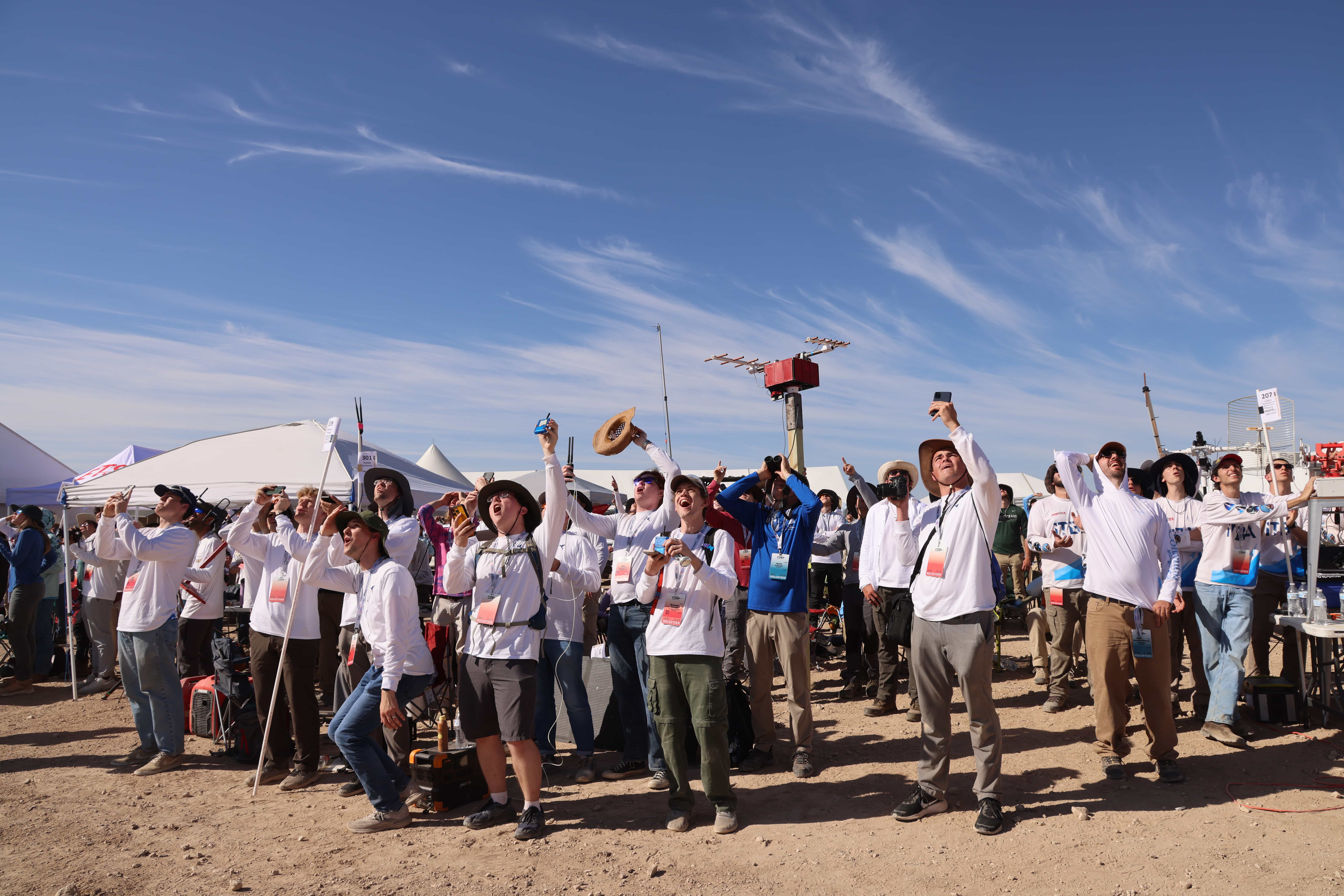
Team reaction during launch
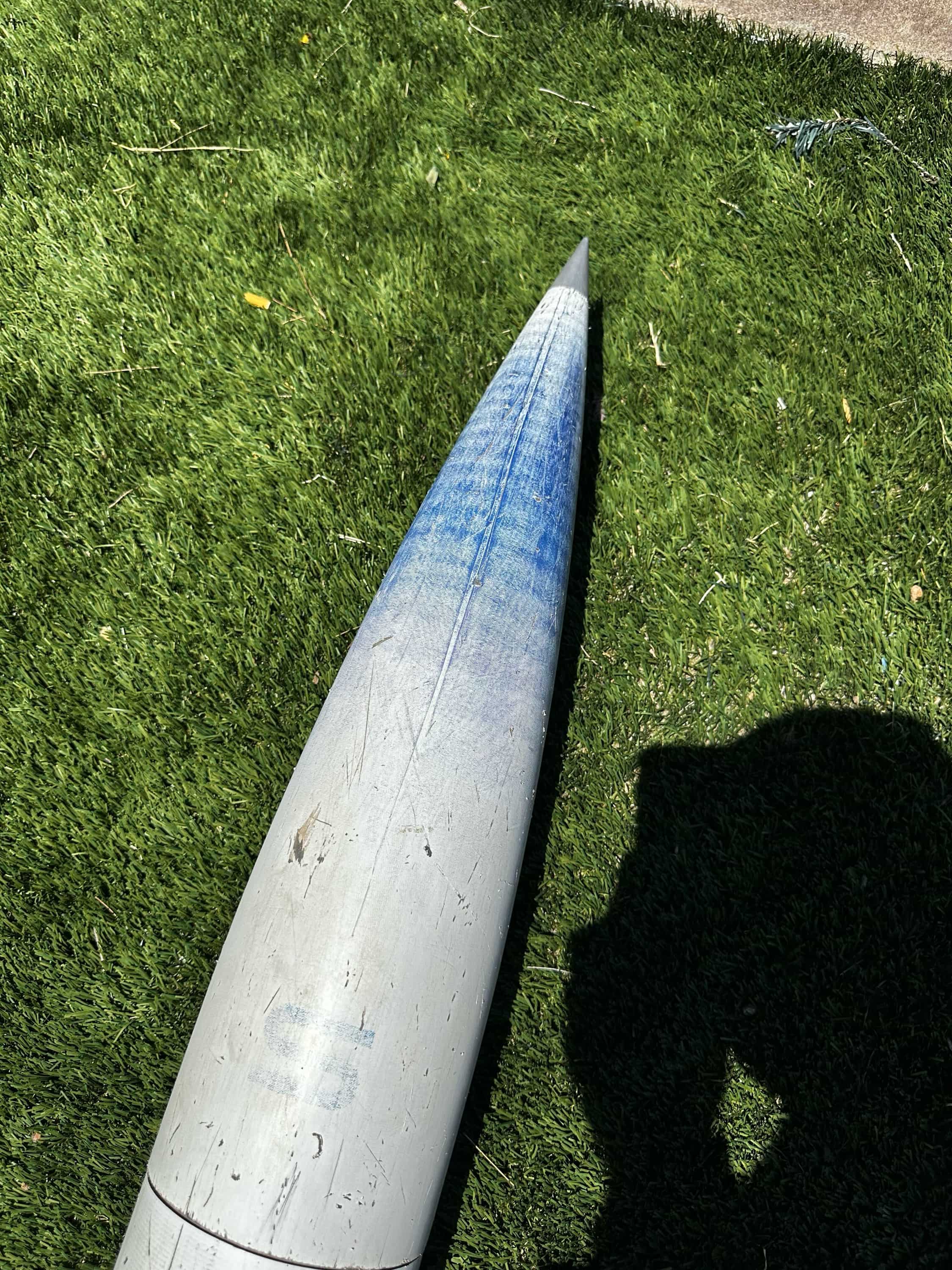
Speed induced heat rash stripped the color from our nose cone
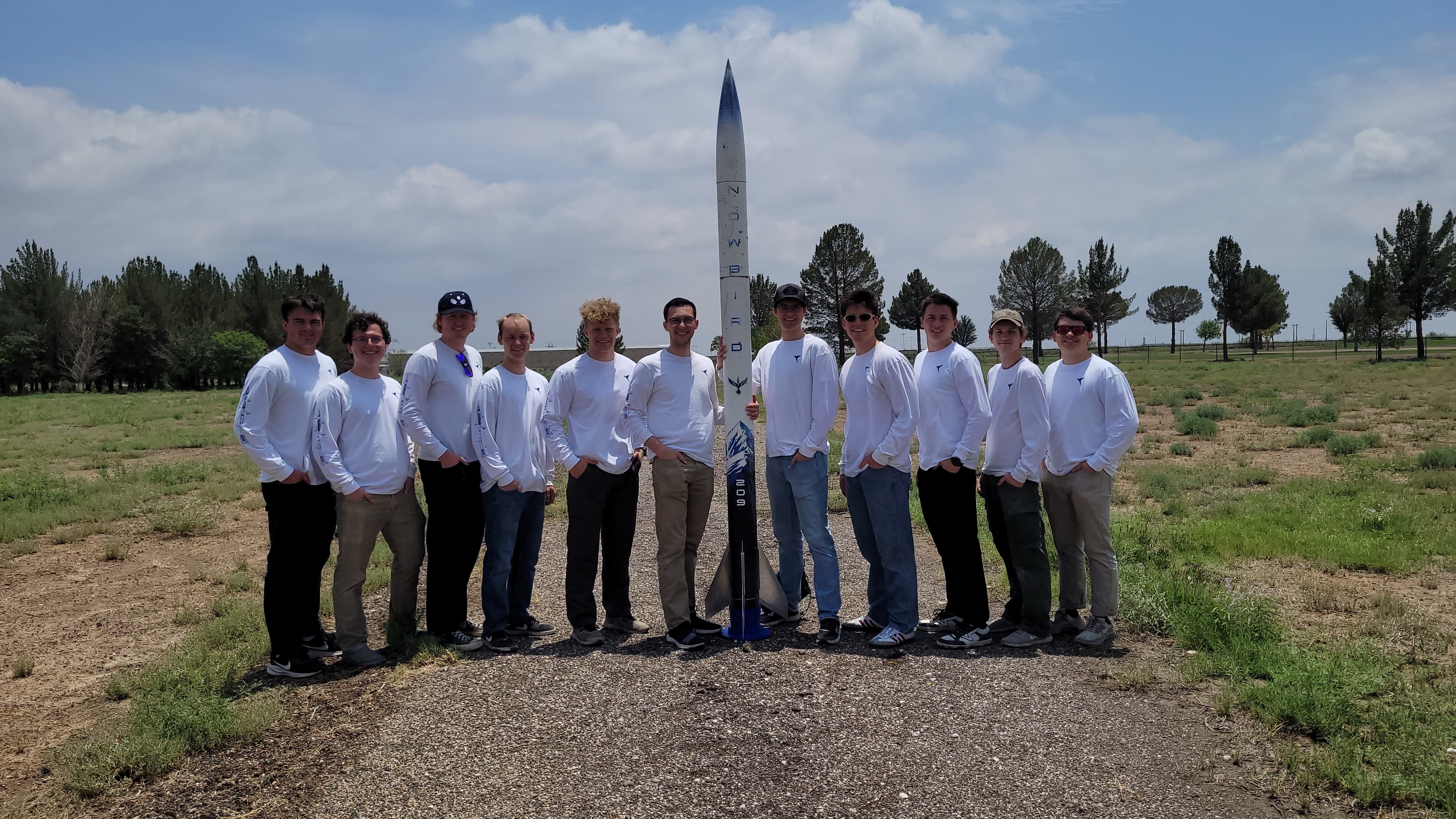
Post launch team photo; Snowbird was completely recovered and suffered minor damage